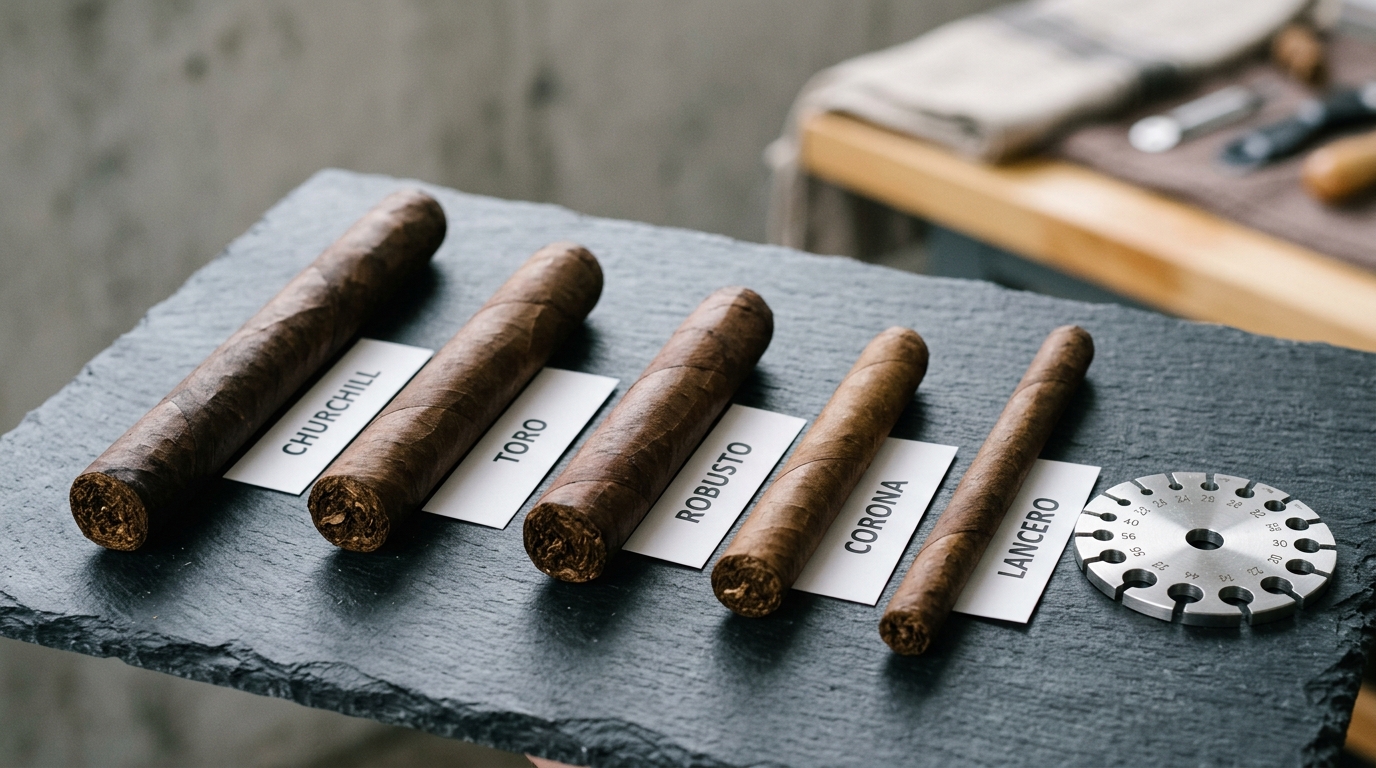
Cigar sizes and shapes are defined by two measurements: length in inches and ring gauge (diameter in 64ths of an inch). A 6 × 50 Toro, for example, is 6 inches long with a 50/64-inch diameter. These two numbers determine how a cigar smokes - its burn time, draw resistance, flavor concentration, and temperature.
Walking into a cigar shop for the first time can feel overwhelming. Rows of cigars range from pencil-thin to fist-sized, and every box carries a name like Churchill, Robusto, or Lancero that means nothing to a newcomer. This guide breaks it all down so you can choose confidently, whether you have 20 minutes or two hours.
The Two Numbers That Matter: Length and Ring Gauge
Every cigar is described by its length (measured in inches) and its ring gauge (measured in 64ths of an inch). A ring gauge of 50 means the cigar is 50/64 of an inch in diameter - just under an inch. A ring gauge of 60 is noticeably thick, roughly the diameter of a quarter.
These numbers affect the smoking experience in direct ways:
- Longer cigars cool smoke more before it reaches your palate, often producing a smoother, milder experience.
- Larger ring gauges allow more filler leaves in the blend, which can add complexity and slow the burn dramatically.
- Smaller ring gauges concentrate heat and flavor, often making the same blend taste sharper or more intense.
Parejos vs. Figurados: The Two Shape Families
All cigars fall into one of two shape families: parejos (straight-sided) or figurados (irregular-shaped). Most cigars sold in shops are parejos. Figurados require more skilled rolling and are often priced higher because of the craftsmanship involved.
Parejos
Parejos have a consistent diameter from foot to head. The head - the end you cut and smoke - is closed with a cap. Common parejo vitolas include the Robusto, Corona, Churchill, and Toro.
Figurados
Figurados deviate from the straight cylinder. Subtypes include the Torpedo (tapered head), Belicoso (short taper at the head), Pyramid (wide foot tapering to a pointed head), Perfecto (pinched at both ends), and Culebra (three thin cigars braided together). The tapered head on a Torpedo or Pyramid concentrates flavor on the tongue and gives the roller a unique challenge.
Common Cigar Sizes Explained
The following table covers the most widely available vitolas, their standard dimensions, and what kind of smoker each suits best.
Vitola Length Ring Gauge Approx. Smoke Time Best For Petit Corona 4–4.5 in 40–44 20–30 min Quick smoke, beginners Corona 5.5–6 in 42–44 45–60 min Classic benchmark vitola Robusto 4.75–5 in 48–52 45–60 min Most popular size worldwide Toro 6–6.5 in 50–54 60–90 min Balance of length and ring gauge Churchill 7 in 47–50 90–120 min Long sessions, aficionados Lancero / Panetela 7–7.5 in 38–40 60–75 min Flavor-forward, experienced smokers Gordo / Gran Toro 6 in 60+ 90–120 min Big ring gauge enthusiasts Torpedo / Belicoso 6–6.5 in 52–54 60–90 min Complex flavor, tapered drawHow Size Affects Flavor
Size is not just a matter of smoke time - it genuinely changes how a blend tastes. Blenders design cigars with specific vitolas in mind, and the same tobaccos in two different sizes can taste meaningfully different.
- Thin ring gauges (38–44): The wrapper leaf makes up a higher proportion of each puff, so wrapper-forward flavors - leather, cedar, spice - dominate. The Lancero is the classic example.
- Medium ring gauges (48–54): The filler and binder leaves balance more evenly with the wrapper. This is where most blenders showcase the full complexity of a blend. The Robusto and Toro fall here.
- Large ring gauges (60+): The sheer volume of filler leaves means earthier, creamier, sometimes softer flavors. The draw is easy, and the smoke is cool.
Choosing Your First Cigar Size
For a first cigar, the Robusto is the correct starting point - every major brand makes one, it smokes in under an hour, and the 50 ring gauge delivers a balanced draw that's neither tight nor loose. Once you're comfortable, try the same blend in a Corona to feel how the narrower ring gauge sharpens the profile, then step up to a Toro for a longer, cooler session.
Avoid Lanceros and Perfectos until you have 10 or more cigars under your belt. These sizes are unforgiving: a tight draw or uneven burn is far more punishing in a thin cigar, and the intensity can be overwhelming for a new palate.
A Note on Naming Conventions
Cigar size names are not standardized across manufacturers. One brand's "Toro" may be a 6 × 52 while another's is a 6.5 × 54. Always check the actual dimensions on the box or band rather than relying on the vitola name alone. Cuban nomenclature (used by brands like Cohiba and Montecristo) and New World nomenclature (used by brands like Padron and Liga Privada) often diverge significantly.
When in doubt, ask your tobacconist for the ring gauge and length. Any reputable shop will have that information immediately available.
Storage and Size: One More Consideration
Larger ring gauge cigars require more humidor space and take longer to properly condition after purchase. A freshly purchased 60-ring Gordo benefits from at least two weeks in a calibrated humidor at 65–70% relative humidity before smoking. Smaller vitolas like the Petit Corona acclimate faster - often within a few days. If you're just starting and don't yet own a humidor, buy smaller sizes and smoke them within a week of purchase.
Cigar Sizes And Shapes FAQ
What is ring gauge and how do I measure it?
Ring gauge is the diameter of a cigar measured in 64ths of an inch. A ring gauge of 50 equals 50/64 of an inch, or roughly 0.78 inches. You can measure a cigar's ring gauge with a simple ring gauge tool (available at any tobacconist) or a caliper. Most cigars sold today range from ring gauge 38 (very thin) to ring gauge 70 (very thick).
Is a bigger cigar always stronger?
No. Strength - nicotine content - depends on the tobacco blend, not the size. A large-ring Gordo filled with mild Connecticut-shade tobacco will be far milder than a thin Lancero packed with Nicaraguan ligero. That said, larger ring gauges often burn cooler, which can reduce harshness and make a strong blend feel more approachable.
How long does a cigar take to smoke?
Smoke time depends on both length and ring gauge. A Robusto (4.75 × 50) averages 45–60 minutes at a relaxed pace of one puff every 30–60 seconds. A Churchill (7 × 48) runs 90–120 minutes. Puffing too frequently overheats the cigar and shortens the experience while also turning the smoke harsh and bitter.
What is the difference between a Torpedo and a Belicoso?
Both are figurado shapes with a tapered head, but a Torpedo has a longer, more pronounced taper that comes to a sharper point, while a Belicoso has a shorter, rounder taper. Belicosos are typically shorter overall - around 5 to 5.5 inches - and their taper starts closer to the head. The Torpedo's extended taper begins further down the body of the cigar.
Should beginners start with a short or long cigar?
Start with a Robusto or a Petit Corona - not a Churchill or a Lancero. Shorter and medium-length cigars in the 48–52 ring gauge range are forgiving, balanced, and finish in under an hour, which is ideal while you're building your palate and smoking technique. Save the long, thin Lanceros and 90-minute Churchills for after you've developed a consistent, slow cadence.
